 Buketov University
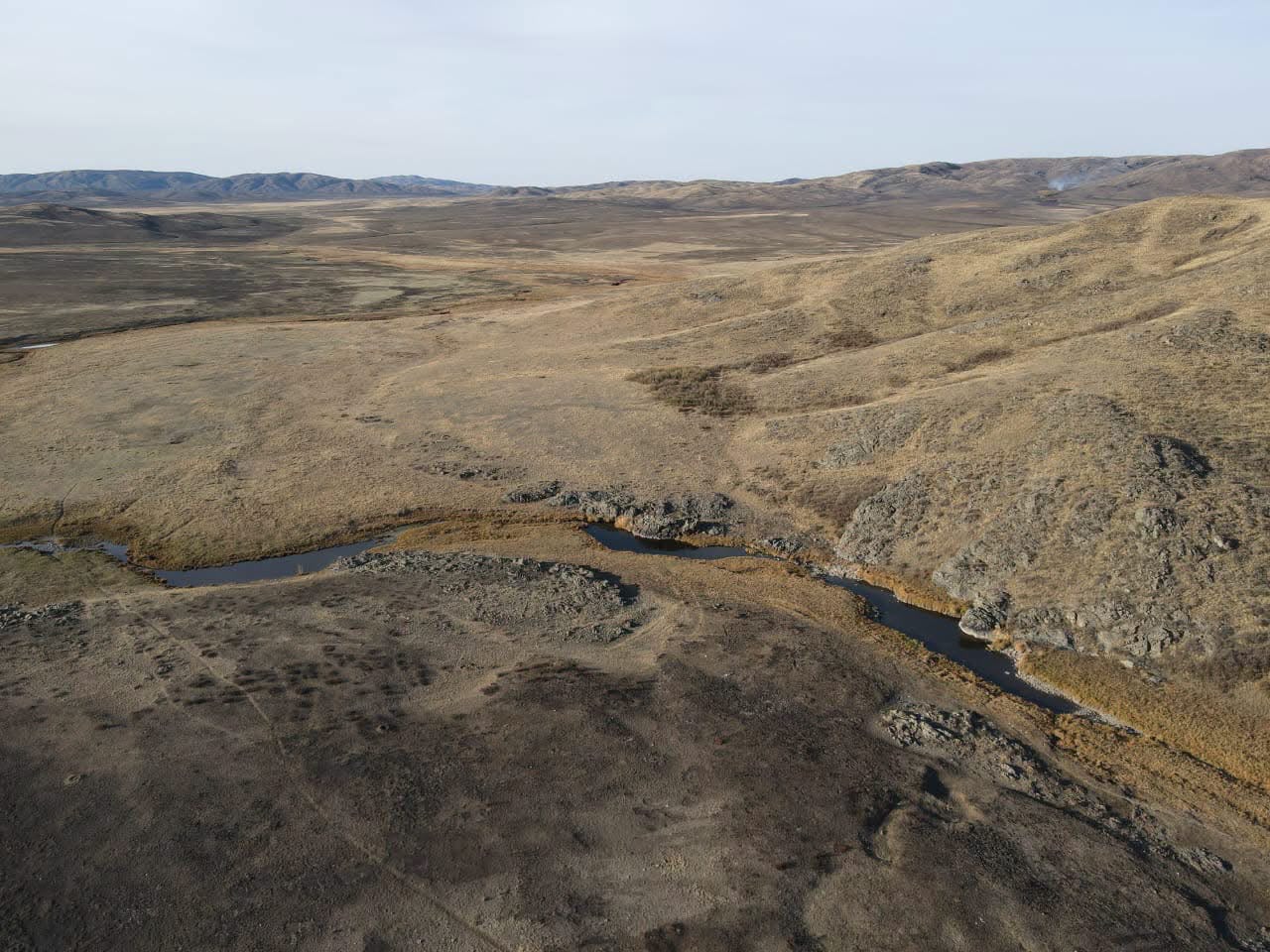
In September 2026, as part of the implementation of research project AR2619943, aimed at studying early medieval archaeological sites in Central Kazakhstan, the survey team of the Saryarka Archaeological Institute continued investigations of a promising area located in the middle reaches of the Tokyrauyn River. Particular attention was paid to the identification, documentation, and preliminary characterization of ritual and commemorative sites reflecting the spiritual culture and funerary and commemorative traditions of the region’s early medieval population.
During the archaeological survey, a group of sanctuaries dating to the Kimak–Kipchak period was identified, comprising seven structures. The sites are represented by relatively uniform constructions in the form of stone burial-mound-like embankments. In the eastern part of the structures, directly within the constructions and at their bases, between three and four anthropomorphic statues were erected. The sculptures are characterized by a number of consistent iconographic features, including joined, arched eyebrows, a bar-shaped nose, and recessed representations of the eyes and mouth. Some of the statues feature depictions of vessels held in the hands, as well as other elements characteristic of medieval stone sculpture. In several examples, sexual characteristics are clearly represented, indicating the existence of specific artistic conventions and variation in the depiction of anthropomorphic figures.
The identified group of sites is of considerable interest for the study of the ritual architecture and monumental sculpture of the early medieval population of Central Kazakhstan. The spatial organization of the structures, the placement of the anthropomorphic statues, and their iconographic characteristics allow these monuments to be considered within the context of the further development of commemorative and ritual traditions of the Turkic period. Such sanctuaries reflect the transformation of earlier ritual practices and their continuity during the period of the Kimak and Kipchak confederations.
According to preliminary typological dating, the monuments belong to the period from the first half of the 10th century to the mid-14th century.